Cart
0
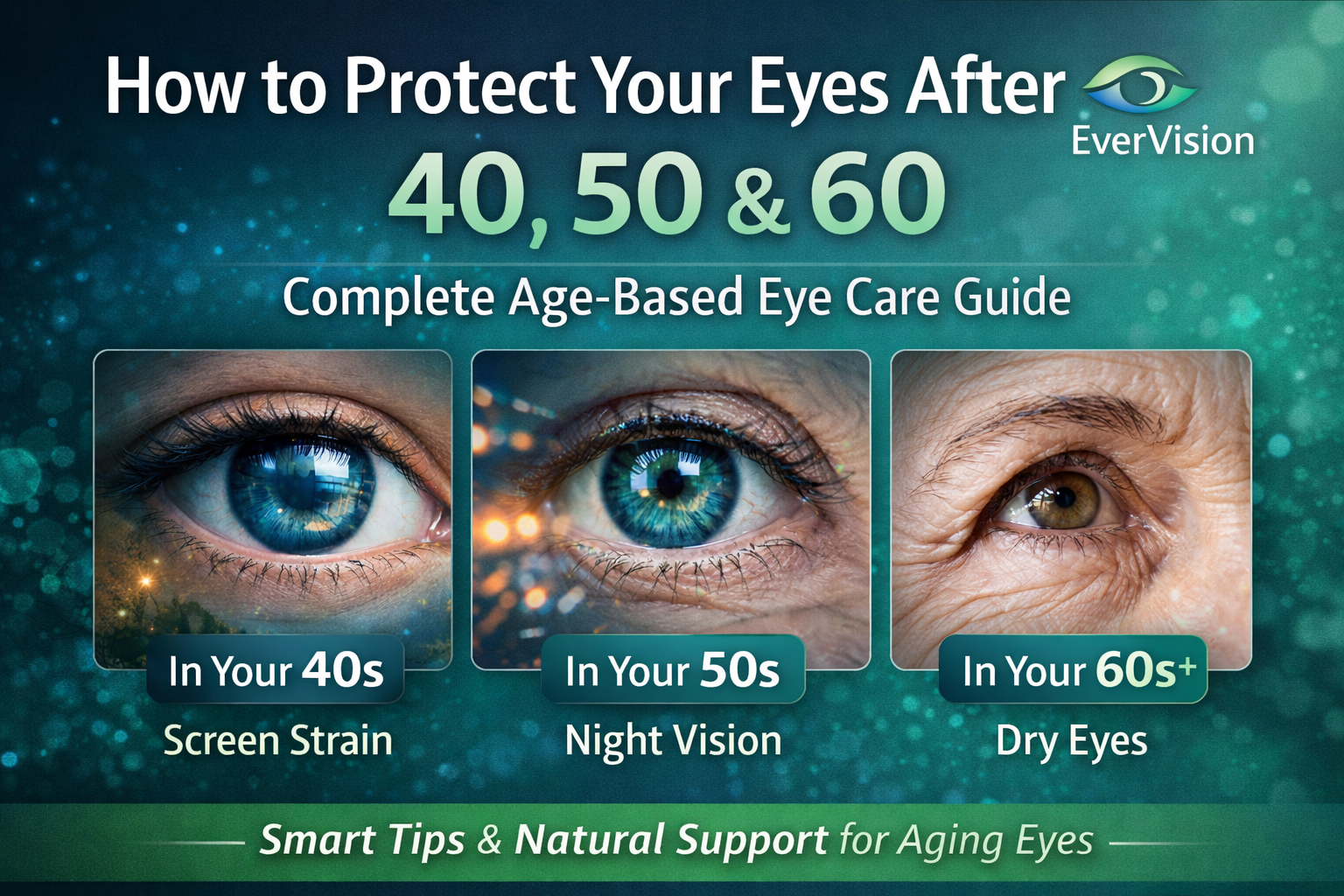
As we age, our eyes undergo natural changes that affect how we see and how comfortable our vision feels throughout the day. Understanding how to protect your eyes after 40 is crucial to maintaining clear vision and preventing discomfort. This complete guide breaks down key eye care tips for your 40s, 50s, and 60s, focusing on common challenges like screen strain, contrast sensitivity, and maintaining overall eye health.
Eye Care in Your 40s: Managing Screen Strain and Prevention
Many people in their 40s experience the first signs of vision changes in your 40s, especially related to prolonged screen use. Digital devices have become a major part of daily life, leading to screen strain in the 40s that can cause headaches, dry eyes, and blurred vision.
Common Issues in Your 40s
-
Digital eye strain from long hours on computers, tablets, and smartphones
-
Difficulty focusing on close objects, known as presbyopia
-
Early signs of dry eye syndrome
How to Protect Your Eyes After 40
-
Follow the 20-20-20 rule: every 20 minutes, look at something 20 feet away for 20 seconds to reduce digital eye strain.
-
Adjust screen brightness and contrast to comfortable levels.
-
Use anti-reflective screen protectors or glasses designed for digital eye strain prevention.
-
Incorporate eye exercises for 40 year olds such as blinking frequently and focusing on distant objects to relax eye muscles.
-
Maintain a balanced diet rich in antioxidants like lutein and zeaxanthin, which support eye health after 40.
-
Consider EverVision for aging eyes, a supplement that fits naturally without pressure and supports eye comfort during screen use.
Taking these steps helps prevent eye aging and keeps your vision sharp as you navigate the demands of work and daily life.
Eye Care in Your 50s: Addressing Contrast and Night Vision Challenges
In your 50s, vision changes become more noticeable. Many people report night vision problems after 50 and struggle with poor contrast vision, making it harder to see clearly in low light or distinguish objects against similar backgrounds.
Common Issues in Your 50s
-
Reduced ability to see in dim light or at night
-
Difficulty distinguishing colors and contrasts
-
Increased risk of cataracts and other age-related eye conditions
How to Protect Your Eyes After 50
-
Schedule regular comprehensive eye exams to monitor changes in vision and eye health.
-
Use proper lighting at home and work to reduce strain on your eyes.
-
Choose eyewear with lenses that enhance contrast and reduce glare.
-
Take eye vitamins for 50s that include lutein, zeaxanthin, and antioxidants to support retinal health.
-
Supplements like EverVision eye supplement can provide natural vision support for seniors, helping with contrast sensitivity and night vision.
-
Avoid smoking and protect your eyes from UV rays by wearing sunglasses outdoors.
These habits support eye health after 50 and help maintain visual clarity and comfort during daily activities.
Eye Care in Your 60s and Beyond: Maintenance and Support for Aging Eyes
Maintaining good vision in your 60s requires a focus on vision care after 60 and proactive support to slow down age-related decline. Many seniors face challenges like dry eyes, cataracts, and macular degeneration.
Common Issues in Your 60s+
-
Increased dryness and irritation
-
Difficulty reading small print or seeing fine details
-
Greater risk of age-related macular degeneration and glaucoma
How to Protect Your Eyes After 60
-
Use senior eye support supplements that combine lutein, zeaxanthin, and antioxidants to protect against oxidative stress.
-
Incorporate vision maintenance supplements like EverVision for aging eyes, which fits naturally without pressure and supports overall eye comfort.
-
Maintain a diet rich in leafy greens, fish, and nuts to provide essential nutrients for eye health.
-
Practice regular eye check-ups to catch and manage conditions early.
-
Use humidifiers and artificial tears to relieve dryness.
-
Engage in gentle eye exercises to maintain flexibility and blood flow.
Focusing on maintaining eyesight in your 60s helps preserve independence and quality of life by supporting clear, comfortable vision.
Final Thoughts on Protecting Your Eyes at Every Age
Eye health changes with each decade, but taking targeted steps can make a significant difference. Whether you are dealing with screen strain in 40s, night vision problems after 50, or seeking natural vision support for seniors, understanding your eyes’ needs is key.
Incorporate good habits like regular eye exams, proper lighting, balanced nutrition, and supplements such as EverVision eye supplement to support your vision naturally. This approach helps you prevent eye aging and maintain healthy eyesight well into your later years.