Cart
0
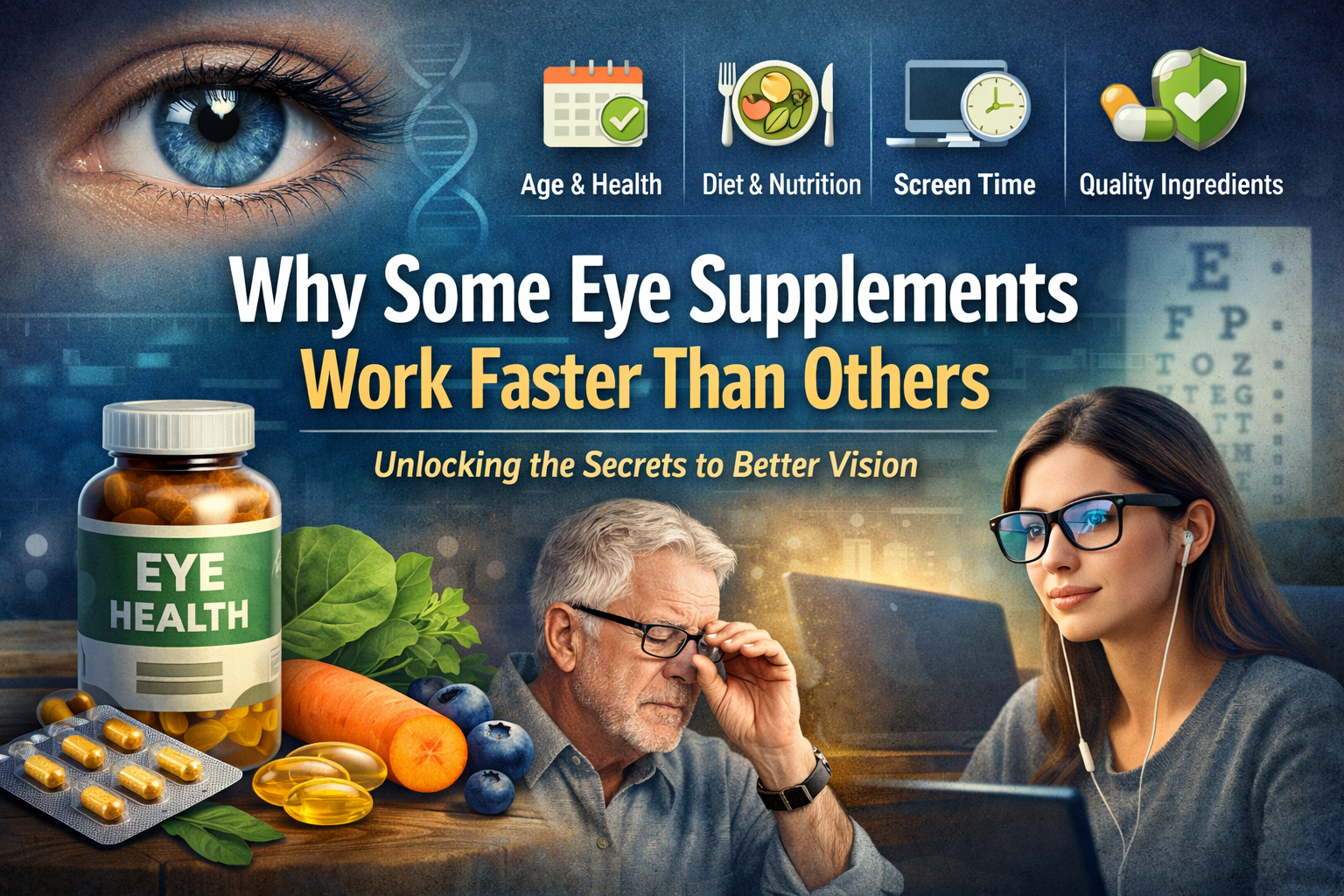
Eye health is a growing concern as more people spend long hours in front of screens and face natural aging changes. Many turn to eye supplements to support their vision, but results can vary widely. Some customers notice improvements quickly, while others wait weeks or months. Understanding why some people see faster benefits from an eye supplement for vision can help you choose the right product and set realistic expectations.
This post explores the key factors that impact the effectiveness of eye supplements. We’ll also compare natural eye supplements vs prescription options and highlight what to look for in the best eye supplement 2026.
How Individual Differences Affect Eye Supplement Results
The speed and degree of improvement from eye vitamins for aging eyes or blurry vision supplements depend on several personal factors:
-
Age and Eye Condition
Younger individuals or those with mild eye strain from screens often see faster results than people with advanced eye diseases. For example, supplements rich in antioxidants for eyes like lutein and zeaxanthin eye health compounds may quickly reduce digital eye strain symptoms but take longer to affect chronic conditions like macular degeneration.
-
Diet and Nutrient Absorption
People who already consume a balanced diet with plenty of vitamin A eye health sources may experience less dramatic changes. Conversely, those with deficiencies often notice quicker improvements. Absorption rates also vary; some individuals metabolize supplements more efficiently, speeding up benefits.
-
Lifestyle and Screen Time
High daily screen use increases eye strain and oxidative stress. Supplements for computer vision syndrome or vision support for screen time can help, but if screen habits don’t change, results may be slower or less noticeable.
-
Consistency and Dosage
Taking the recommended dosage regularly is crucial. Skipping doses or using a lower-quality product can delay results. Comparing eye vitamins comparison charts can help identify supplements with the right ingredient levels.
What Makes an Eye Supplement Effective
Not all eye supplements are created equal. Here’s what to look for to maximize your chances of seeing fast, meaningful results:
-
Key Ingredients
Look for supplements containing lutein and zeaxanthin, which accumulate in the retina and protect against blue light damage. Vitamin A eye health benefits include supporting the cornea and night vision. Antioxidants for eyes reduce oxidative stress, a major factor in eye aging and strain.
-
Formulation and Bioavailability
Some supplements use forms of nutrients that the body absorbs better. For example, lutein supplement vs eye drops shows that oral supplements often provide more sustained benefits than topical options.
-
Natural Eye Supplement vs Prescription
Natural supplements tend to focus on prevention and mild support, while prescription options target specific diseases. Natural supplements are safer for long-term use but may take longer to show effects. Prescription treatments can act faster but often come with side effects.
-
Targeted Support for Screen Users
The best eye vitamins for screen use include ingredients that combat digital eye strain, such as zinc, omega-3 fatty acids, and vitamins C and E. These help reduce inflammation and improve tear production, easing discomfort from prolonged screen exposure.
Why Some Supplements Work Faster Than Others
-
Quality of Ingredients
High-quality, pure ingredients without fillers or artificial additives tend to work better. Supplements labeled as the best eye supplement 2026 often undergo third-party testing to ensure potency.
-
Synergy of Ingredients
Supplements combining multiple antioxidants for eyes, vitamins, and minerals can provide broader protection and support. For example, lutein benefits for eyes increase when paired with zeaxanthin eye health compounds.
-
User Compliance
People who follow dosage instructions and combine supplements with healthy habits like reducing eye strain from screens, taking breaks, and wearing blue light glasses often see faster improvements.
-
Underlying Health Conditions
Chronic diseases like diabetes or hypertension can slow the benefits of eye supplements. Managing these conditions alongside supplementation is essential.
Practical Tips to Maximize Eye Supplement Benefits
-
Choose the Right Supplement
Use an eye vitamins comparison to find products with clinically supported ingredients. Avoid supplements that promise instant cures or use vague terms.
-
Maintain a Healthy Diet
Eat foods rich in vitamin A eye health nutrients such as carrots, spinach, and eggs to complement supplements.
-
Limit Screen Time and Practice Eye Care
Incorporate breaks, use digital eye strain solutions like screen filters, and practice the 20-20-20 rule (every 20 minutes, look 20 feet away for 20 seconds).
-
Stay Consistent
Take your supplements daily as directed. Results often appear after several weeks of regular use.
-
Consult a Professional
If you have persistent blurry vision or other symptoms, see an eye care professional before relying solely on supplements.
Summary
The speed at which customers experience results from an eye supplement for vision depends on age, diet, lifestyle, supplement quality, and consistency. Natural eye supplements vs prescription options serve different needs, with natural products offering safer, long-term support and prescription treatments targeting specific conditions.